| |
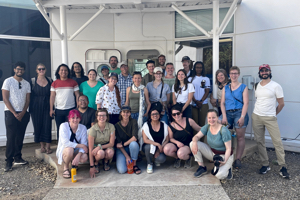
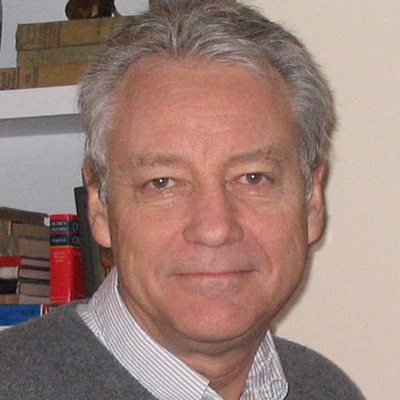
Buzz Holling awarded 2008 Volvo Environment Prize. The Volvo Environment Prize, administered by an independent foundation, this year goes to Buzz Holling, Canadian ecologist and scientist, whose theories on how ecosystems deal with sudden changes have had great global influence.
Today, with many worrying about global climate change and unexpected natural disasters, Buzz Holling stresses the importance of increasing our society’s ability to be flexible and cope with change. This is necessary for the continued use of natural resources, because crisis, Holling says, is an inevitable part of nature’s way of functioning. Read the full Press Release from the Volvo Environment Prize here. For more information on the Volvo Environment Prize go to www.environment-prize.com. (Photo: Jerker Lokrantz/Azote)
Radio Feature: Resilience, Adaptation and Transformation in Turbulent Times. Mark Sommer, host and executive producer of A World of Possibilities, interviewed scientists and researchers from around the world at the Resilience 2008 conference last month in Stockholm, Sweden. The 55minute long radio show can be heard online and includes interviews with Buzz Holling, Brian Walker, Carl Folke, Charles Redman, Will Steffan and Frances Westley. Their combined wisdom provides insight into how societies can become resilient in the face of traumatic change and unprecedented transition. World of Possibilities is an award-winning, nationally and internationally syndicated radio program, that is part of the Mainstream Media Project. The show’s website includes links to other guest interviews that were recorded at the conference.
Resilience Assessment Workbook Wiki is launched.
The resilience workbook wiki is a collaborative project involving researchers and practitioners who seek a holistic approach to managing social-ecological systems for long-term sustainbility. The workbook wiki is aimed at those who have experience applying resilience concepts to social-ecological systems and who want to share their knowledge by contributing to the on-going development of the resilience assessment guide. The workbook wiki is based on Version 1.0 of the Practitioner's workbook Assessing and Managing Resilience in Social-Ecological Systems. Over the coming months new modules and examples will be contributed to the workbook wiki by a growing community of people who are doing resilience assessments in a variety of systems around the world. Visit the wiki main page to learn more - http://wiki.resalliance.org.
New publication: Agricultural modifications of hydrological flows create ecological surprises. Line Gordon, Garry Peterson, and Elena Bennet identify and review evidence for agriculture-related regime shifts in three parts of the hydrological cycle: interactions between agriculture and aquatic systems, agriculture and soil, and agriculture and the atmosphere. TREE: In Press, online 4 March 2008.
Adaptive Co-Management: Collaboration, Learning, and Multi-Level Governance. A new book edited by Derek Armitage, Fikret Berkes, and Nancy Doubleday offers a comprehensive synthesis of concepts, tools and strategies in an emerging field that is changing how we think about environmental governance. Divided into 3 parts: theory, case studies, and challenges, the book is informed by researchers and practitioners with over two decades of experience and will be a valuable resource for researchers, environmental practitioners, policy-makers, and students. For more information or to order see UBC Press.
PNAS Special Feature: Going Beyond Panaceas.
Edited by Elinor Ostrom, Marco A. Janssen, and John M. Anderies, the special feature (PNAS Sept. 25, 2007, Vol. 104, no. 39) offers insight into the governance of human-environment interactions. Following is an excerpt from the Editorial abstract: "The aim of this special feature is to provide theoretical analysis and empirical evidence to caution against the tendency, when confronted with pervasive uncertainty, to believe that scholars can generate simple models of linked social–ecological systems and deduce general solutions to the overuse of resources. Practitioners and scholars who fall into panacea traps falsely assume that all problems of resource governance can be represented by a small set of simple models, because they falsely perceive that the preferences and perceptions of most resource users are the same."
Resilience Assessment Workbooks now available The RA has developed two workbooks for assessing resilience in social-ecological systems. "Assessing and managing resilience in social-ecological systems: A practitioners workbook" has been designed specifically to provide guidance to people engaged in natural resource management, through a set of activities designed to explore system parameters and management options for their own system of interest from a resilience perspective. A second workbook "Assessing resilience in social-ecological systems - A workbook for scientists" emerged from case-study comparisons of regional SESs in the Resilience Alliance, and builds on an earlier framework. It is intended as a guide for those familiar with the basic concepts of resilience and systems dynamics.
Access the workbooks here.
Join the RA's researcher database, submit your own profile, and search the database to find others working in your field. Anyone may submit their information for review and inclusion in the database. Database fields include: name, institution, position, country, geographic area of research, keywords, brief summary of research interests, and contact information.
Join the RA's email group for graduate students and post-docs doing resilience-related research. The email group is open to all graduate students/post-docs who are interested in discussing resilience research and sharing information on events, conferences, literature, etc.
Read More.
Resilience Thinking A book by CSIRO scientist and RA Program Director Brian Walker and science writer David Salt provides an accessible introduction to resilience research and argues for a dramatic change in how natural resources are managed. The resilience framework is explored by way of five case studies that demonstrate how communities are better able to withstand cycles of change when ecological drivers are better understood and when natural change is embraced rather than controlled. Copies of the book can be ordered online from Island Press
Ecology & Society Special Feature: Exploring Resilience in Social-Ecological Systems: Comparative Studies and Theory Development. Guest Editors Brian Walker, Ann Kinzig, John Anderies, and Paul Ryan have compiled a set of research, synthesis and insight articles that draw on comparisons of 15 case studies. Special Feature Table of Contents
|
|
|